Guide · the first ten minutes
The power's tripped. A pipe has burst.
Most emergency call-outs start with a few minutes where nobody in the house knows what to touch. This page is the short version of what to do in those minutes — before an engineer gets there, and regardless of who you end up calling. None of it requires tools or training, and all of it makes the repair quicker.
If you can smell gas, stop reading and call the National Gas Emergency Service on 0800 111 999. It's free and staffed 24 hours. Do that before calling any engineer, including Bestfix.
0800 111 999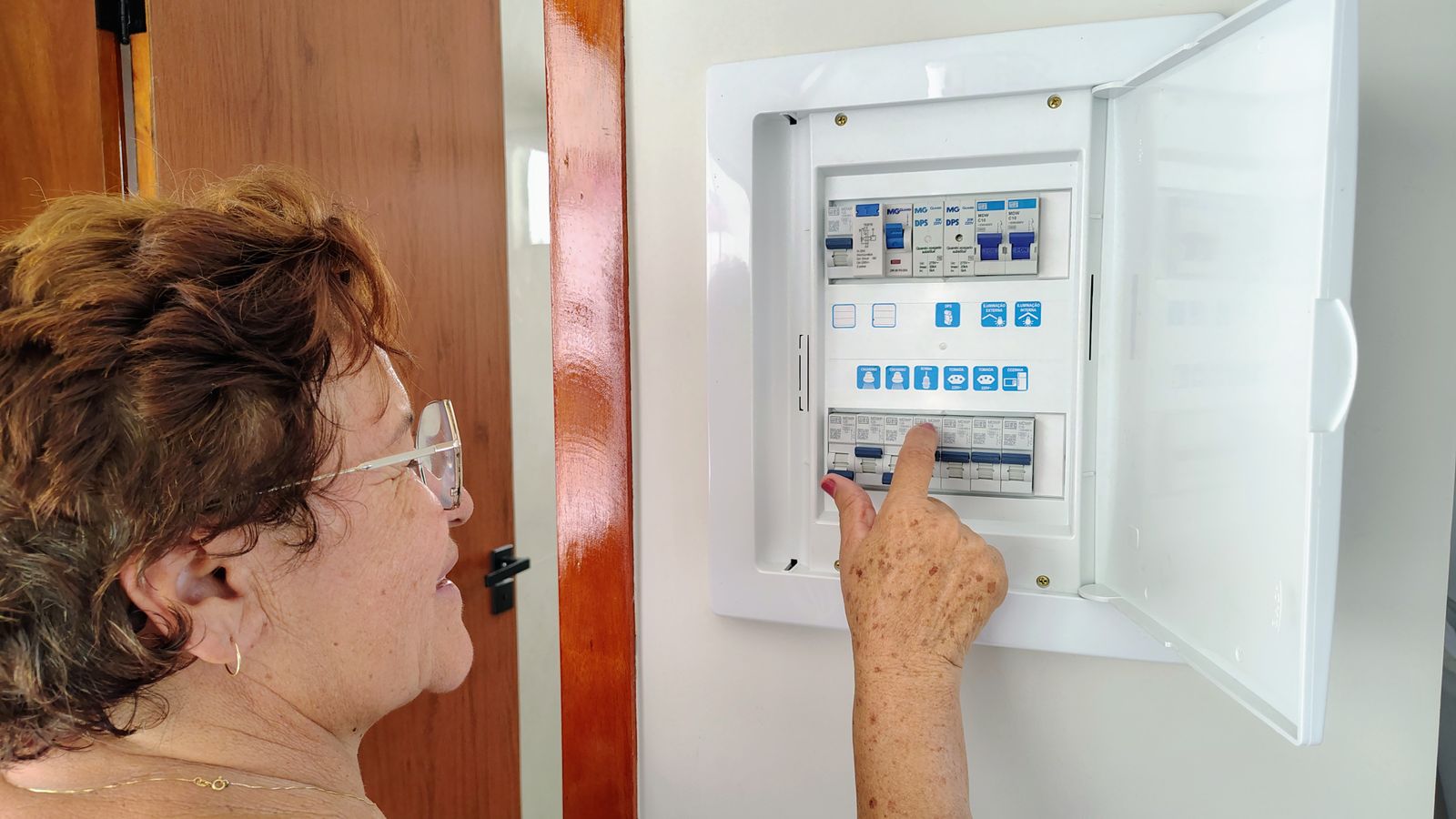
Find these three things before you need them
Ten quiet minutes on a Sunday afternoon will save you twenty frantic ones at some point. Go and look now, and show whoever else lives in the house.
- 01The consumer unit
- Usually near the front door, under the stairs, in a hallway cupboard or in the garage, next to the electricity meter. Know where it is and make sure you can physically reach it without moving boxes in the dark.
- 02The internal stop tap
- Most often under the kitchen sink, sometimes in a downstairs loo, utility room or airing cupboard. Turn it clockwise to shut off. Worth turning it a quarter turn twice a year — stop taps that are never moved are the ones that seize solid.
- 03The gas emergency control valve
- Beside the gas meter, with a handle that turns a quarter turn so it sits across the pipe rather than along it. If you have a smart meter, the meter box is still where the manual valve lives.
The power has gone off
- Look outside first. If the street lights and your neighbours are dark too, it's a network outage, not your installation — in Great Britain you can call 105 free from any phone to reach your local network operator.
- If it's only your property, open the consumer unit and look for a switch that has flipped down or to 'off'. A main RCD trips the whole board; an individual breaker or RCBO kills one circuit.
- Before resetting anything, unplug or switch off whatever was in use when it went — a kettle, an immersion heater, an extension lead, garden equipment, a washing machine mid-cycle. Faulty appliances are the most common cause by a wide margin.
- Reset the tripped device. If it holds, plug things back in one at a time and wait a moment between each; the one that trips it again is your culprit.
- If it trips instantly with everything unplugged, stop. That points at the fixed wiring rather than an appliance, and it needs testing rather than persistence.
- Do not keep resetting a device that keeps tripping. It is protecting you from something — repeatedly forcing it back on is the one genuinely dangerous response.
There's a burning smell, scorching or a hot socket
- Switch that circuit off at the consumer unit, or the main switch if you're not sure which circuit it is.
- Unplug what's connected to it, if you can do that safely and without touching anything hot or damaged.
- Don't run it 'just to see'. Heat marks around a socket, plug or switch mean a loose or failing connection, and those get worse quickly.
- Leave it off and get it looked at. Burnt terminals and cooked wiring are a routine repair for an electrician and a house fire if ignored — one Bestfix review describes exactly this: switches replaced and burnt wiring sorted, on a Saturday night.
A pipe has burst or water is coming through a ceiling
- Turn off the internal stop tap, clockwise. If the water is coming from a heating pipe or radiator rather than the mains, also turn the heating off.
- Open all the cold taps, starting downstairs, to drain the pipework and reduce what's left to escape.
- Switch off electrics in the affected area at the consumer unit — water and downlights are a bad combination, and a ceiling holding water above a light fitting is worse.
- If a ceiling is bulging with trapped water, keep everyone out from underneath. It will come down, and it's far better that it comes down into a bucket than onto someone.
- Catch and contain what you can, move what matters out of the way, and photograph everything before you clear up — insurers ask.
- Then call. A leak that's been isolated is a much smaller job than one that's still running.
No heating or no hot water
- Check the obvious first: is the boiler switched on at its own fused spur, is the programmer calling for heat, and is the room thermostat set above the current temperature?
- Check the pressure gauge on the boiler. Most sealed systems sit around 1 to 1.5 bar when cold; well below that and the boiler may refuse to fire.
- Check whether other gas appliances work. If nothing gas-fired works, the issue may be supply or a prepayment meter rather than the boiler.
- Note the fault code on the display before resetting — it's the single most useful thing you can tell an engineer, and it disappears when you reset.
- Reset once. If it locks out again, leave it; repeated resets don't fix anything and can hide the pattern that identifies the fault.
- In cold weather, a condensate pipe frozen where it runs outside is a very common cause. A slow pour of warm — not boiling — water along the outside pipe often clears it.
You can smell gas
- Call the National Gas Emergency Service on 0800 111 999. It is free and staffed 24 hours. Do this first — before calling any engineer, including us.
- Open doors and windows.
- Turn the gas off at the emergency control valve by the meter, if you can reach it safely.
- Don't operate any electrical switches, don't use the doorbell, and don't use a phone inside the property — go outside to call.
- No naked flames, and don't smoke.
- Leave the property if the smell is strong or you feel unwell, and wait outside for the engineer.
Once the immediate risk is under control, the repair itself is usually far less dramatic than the ten minutes that preceded it. Bestfix covers Guildford and Surrey for exactly these call-outs, Monday to Sunday, around the clock — and because the same engineer holds both the electrical and the heating side, a fault that turns out to be half one and half the other doesn't become two separate visits.
This page is general safety guidance, not instructions to carry out repairs. Anything involving gas, or working inside a consumer unit, is work for a registered engineer.